04Baby guide, 4 picks compared
Bassinet vs. Bedside Sleeper vs. Crib: The Newborn Sleep Buying Guide
Editor's pick HALO BassiNest 2-in-1 Bedside Bassinet Sleeper


For most newborns rooming with parents for the first several months, a bedside sleeper beats jumping straight to a crib, and the HALO BassiNest 2-in-1 Bedside Bassinet Sleeper is the strongest all-around pick. It sits flush against your mattress so you're not climbing out of bed for 3am feeds, and it swivels back for solo use once you can sit up. If your budget is tight, the Arm's Reach Mini Ezee 2-in-1 Co-Sleeper covers the same core job for a fraction of the price. Skip a dedicated bassinet product entirely only if you're not room-sharing, go straight to a crib in that case.
Our picks at a glance
- Pick 01Editor's pickHALO BassiNest 2-in-1 Bedside Bassinet Sleeper
Best for room-sharing families with a standard bed frame who want the shortest possible reach at night.
- Pick 02Also goodSNOO Smart Sleeper (Happiest Baby)Sold by Happiest Baby
Best for parents with the budget who have a baby that's a genuinely difficult, easily startled sleeper.
- Pick 03Budget pickArm's Reach Mini Ezee 2-in-1 Co-Sleeper
Best for families who want a real bedside sleeper without the premium price tag.
- Pick 04Also goodChicco LullaGo Anywhere Portable Bassinet
Best for parents who want one bassinet that travels between rooms or goes with them on trips.
Bassinet, Bedside Sleeper, or Crib: Which Do You Actually Need First?
These three product categories solve different problems, and most families end up using two of them in sequence, not one.
If you're room-sharing and want the shortest possible reach for nighttime feeds, get a bedside sleeper that attaches to or sits flush against your mattress. You can pull baby toward you without getting out of bed.
If you want a bassinet you can move between rooms, bedroom at night, living room during the day so the baby's still nearby while you're awake, get a standalone portable bassinet instead of one that's locked to your bed frame.
If your baby wakes at every motion and sound, or you have the budget for it, a motion-responsive smart bassinet is worth considering, with the tradeoffs spelled out below.
If you're not room-sharing, or your baby has already outgrown a bassinet's weight limit or started pushing up on hands and knees, skip straight to a crib. A bassinet at that point is either unnecessary or unsafe to keep using, whichever applies.
The picks, compared
| Product | Price Tier | Best For | Buy |
|---|---|---|---|
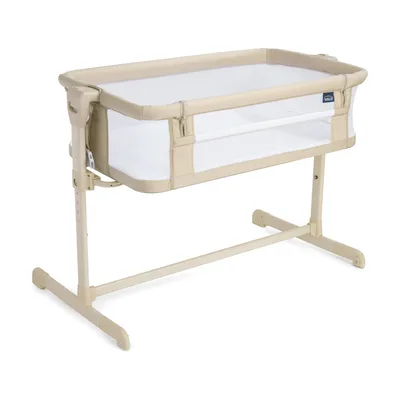 HALO BassiNest 2-in-1 Bedside Bassinet Sleeper HALO BassiNest 2-in-1 Bedside Bassinet Sleeper | Price tier 3 of 4 | Room-sharing families who want the shortest possible reach at night | Check price |
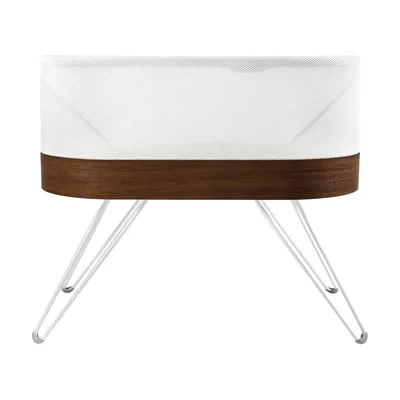 SNOO Smart Sleeper (Happiest Baby) SNOO Smart Sleeper (Happiest Baby) | Price tier 4 of 4 | High-need sleepers and parents who want motion-response assistance | Check price at Happiest Baby |
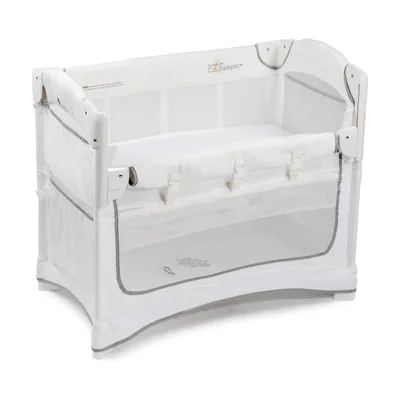 Arm's Reach Mini Ezee 2-in-1 Co-Sleeper Arm's Reach Mini Ezee 2-in-1 Co-Sleeper | Price tier 1 of 4 | Budget bedside setup that still attaches to the bed | Check price |
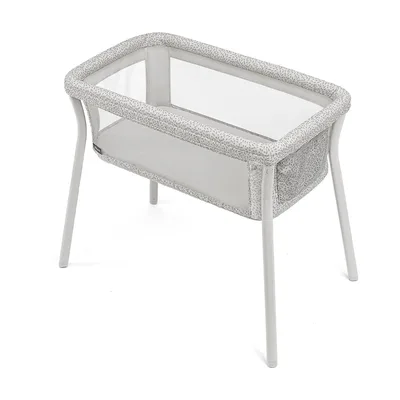 Chicco LullaGo Anywhere Portable Bassinet Chicco LullaGo Anywhere Portable Bassinet | Price tier 2 of 4 | Moving baby between rooms, or travel | Check price |
The picks, reviewed
01HALO BassiNest 2-in-1 Bedside Bassinet Sleeper
The BassiNest line is built around one job: getting baby as close to your mattress as possible without bed-sharing. It attaches under your mattress with an adjustable arm, swivels 360 degrees so you can pull the bassinet over the bed for feeds and push it back after, and has breathable mesh sides for airflow and visibility. It also works as a freestanding bassinet if you'd rather not attach it to the bed at all.
- Genuinely shortens the reach for nighttime feeds compared to a standalone bassinet on the floor; mesh sides let you see and hear the baby easily; converts to freestanding use
- The under-mattress attachment arm needs a specific bed-frame clearance, so it doesn't fit every setup, adjustable bases, low platform beds, and some storage-drawer frames can be incompatible, and it's worth checking your frame before buying rather than after
02SNOO Smart Sleeper (Happiest Baby)
Not currently sold on Amazon. Sold and rented directly by Happiest Baby (checked 27 September 2026).
In June 2026 the FDA sent Happiest Baby a warning letter about SNOO sleep-sack sizes and a hospital bundle sold without FDA review, and about reports of unsanitary refurbished units. It was a warning letter, not a recall of the SNOO. Read the Consumer Reports summary.
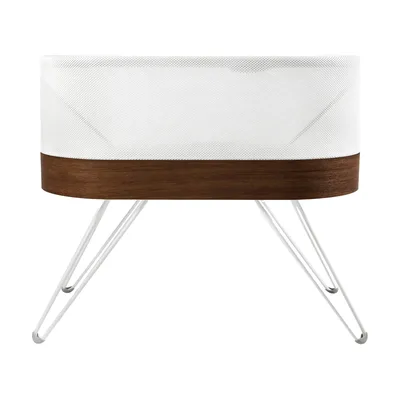
The SNOO is a motorized bassinet designed by pediatrician Dr. Harvey Karp that responds to a crying baby with rocking motion and white noise, escalating and calming down automatically, and pairs with a proprietary swaddle sack that clips into the bassinet to keep baby positioned on their back. It's the only product in this comparison that's actively doing something while your baby sleeps rather than just holding them.
- Motion-response can genuinely extend sleep stretches for babies who wake at every noise or squirm; the app tracks sleep patterns; it's the most "hands-off" option here
- It's the most expensive product in this comparison by a wide margin, and the swaddle sacks are a proprietary, ongoing cost as baby sizes up
- Also worth knowing: in June 2026 the FDA issued a warning letter to Happiest Baby, Inc. over marketing an unauthorized "SNOO Hospital Bundle" sleep sack and quality-system compliance issues
- We couldn't verify from public reporting whether this affects units already sold to consumers, so treat it as a live regulatory situation worth a quick check before buying, not a resolved non-issue
03Arm's Reach Mini Ezee 2-in-1 Co-Sleeper
Arm's Reach has been making bedside co-sleepers for years, and the Mini Ezee is the compact version. A smaller footprint than their standard co-sleeper line, with straps that secure it to your bed frame so one side sits flush against your mattress. It sets up without tools and folds down for storage or travel.
- Far cheaper than either the HALO or SNOO while still solving the core bedside-reach problem; compact footprint works in smaller bedrooms; simple to assemble
- The strap-and-buckle attachment system takes more fiddling to get level and secure against your specific bed frame than the HALO's rigid arm, and it's on you to check the straps are tight every time you reposition it
- It's less forgiving of a rushed setup
04Chicco LullaGo Anywhere Portable Bassinet
The LullaGo is a standalone bassinet, not a bedside-attached one. It doesn't hook to your mattress, which means it's not the pick for shortest-possible-reach nighttime feeds, but it's genuinely light (Chicco lists it at roughly 12-13 lbs) and folds into a carry bag, so it's the one in this lineup you'd actually move between the bedroom and living room or bring to a grandparent's house.
- Lightest and most portable option here by a clear margin; breathable mesh side panels; padded mattress included
- Because it sits on its own legs on the floor rather than attaching to your bed, it sits lower than your mattress, worse for reaching in after a C-section or any limited-mobility recovery, which matters more in the first weeks than the portability does
Buyer FAQ
Do I need a bassinet AND a crib, or can I just start with the crib?
The AAP recommends room-sharing (baby's sleep surface in your bedroom, not your bed) for at least the first 6 months. A full-size crib usually doesn't fit next to an adult bed, which is why most families use a bassinet or bedside sleeper first and move to the crib, in the nursery, once that room-sharing window ends.
What's actually different between a bassinet and a bedside sleeper?
A standalone bassinet is a fully enclosed, freestanding basket you can move anywhere in the room. A bedside sleeper (sometimes called a co-sleeper) sits flush against or attaches to your mattress with one side lower or open, so you can reach the baby without fully getting up. Bedside sleepers are more convenient for nighttime feeds; standalone bassinets are more flexible about where they go.
When do babies outgrow a bassinet and need to move to a crib?
Most bassinets and bedside sleepers are rated up to a specific weight (commonly around 20 lbs) or until the baby can push up on hands and knees, roll over, or pull to sit, whichever happens first. For most babies that's somewhere between 3 and 6 months, though every product's manual has the exact cutoff and it's worth checking rather than assuming.
Evidence level: ResearchedWe did not set up or sleep-test any of these products ourselves.
What we did, and did not do
- What we did
- Compared the four products on published dimensions, weight limits, and the current federal infant-sleep rules.
- Last verified
- 5 September 2026
This is desk research, not a hands-on test. We did not physically set up and sleep-test each product ourselves, and we're saying that plainly rather than implying otherwise. We compared products across four things: whether they're designed specifically for bedside/room-sharing use versus general nursery use, price tier, verified current availability (we dropped anything that showed signs of discontinuation), and the pattern of real complaints we could find in reviews and coverage, not just the marketing copy. We did not accept sponsored placements for this comparison.
Who wrote this
Bobby and Nikki Wiltgen. Married ten years, together sixteen. We run weddings, events, restaurants and short-stay rentals, and we are raising three kids. We label how we know on every post. Read our evidence standard, or more about us.