04Baby guide, 5 picks compared
Car Seats That Fit Small Cars: Measured Against Published Dimensions
Editor's pick Clek Fllo


If you need one seat that won't crowd whoever sits next to it, the Clek Fllo is the strongest pick. Its published seating width barely widens between the base and shoulder area, unlike infant carriers that flare out at the handle. If you're shopping specifically for a newborn and want the easier, cheaper starting point, the Chicco KeyFit 35 gets most families through the first year without a fit fight.
Our picks at a glance
- Pick 01Editor's pickClek Fllo
Best for families installing three seats across one row, or anyone replacing a bulkier convertible in a compact sedan.
- Pick 02Budget pickChicco KeyFit 35
Best for a first infant seat in a compact car, especially if you want a seat your local car-seat-check technician has already installed a hundred times.
- Pick 03For a specific needCybex Aton G2 with Load Leg BaseNew in this guide
Best for parents who want a load-leg infant seat without paying the top price tier.
- Pick 04For a specific needNuna Pipa Aire RX + RELX BaseStock uncertain
Best for households where the front passenger's legroom is non-negotiable and you're willing to pay for a load-leg install.
- Pick 05For a specific needDoona+ Car Seat & Stroller
Best for families who want one seat that clicks from the car straight onto its own wheels, and can accept a wider, heavier shell for it.
Match your car and seat stage
Width and depth pull in different directions depending on what you're solving for. Use whichever line below matches your actual problem:
If you're buying for a newborn and drive a compact sedan or hatchback, get the Chicco KeyFit 35. Its base is one of the more compact on the market and it's the seat most car seat installers have fitted the most times, which matters when you're troubleshooting a tight install.
If you need three seats across one bench, twins, or a third child joining two existing seats, get the Clek Fllo. Its width stays close to consistent from the base up to shoulder height, which is the more reliable predictor of whether three seats will actually click into place side by side.
If your infant seat has to go in the middle position, don't just check the base width. Infant carriers usually flare wider at the handle than at the base, so measure that top width against your middle seat's headrest and seatbelt buckle stalks before assuming it'll clear.
If the front passenger needs their seat to stay where it is, get the Nuna Pipa Aire RX. Its load leg is designed to shorten the front-to-back footprint of a rear-facing install compared with seats that rely only on recline angle, which is what actually eats front-passenger legroom.
The picks, compared
| Product | Price Tier | Best For | Widest point (narrower fits more easily) | Buy |
|---|---|---|---|---|
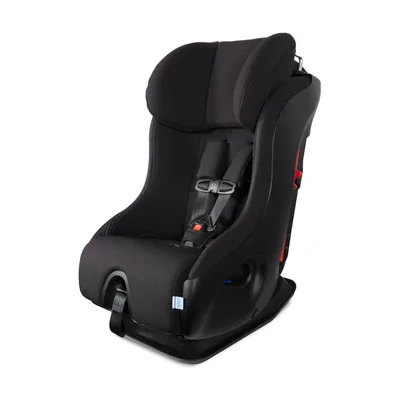 Clek Fllo Clek Fllo | Price tier 4 of 4 | Consistent width top-to-bottom, true 3-across fit | 16.9 in | Check price |
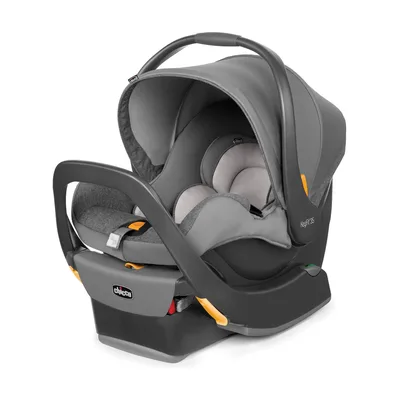 Chicco KeyFit 35 Chicco KeyFit 35 | Price tier 2 of 4 | Budget-friendly newborn seat, compact base | 16.5 in | Check price |
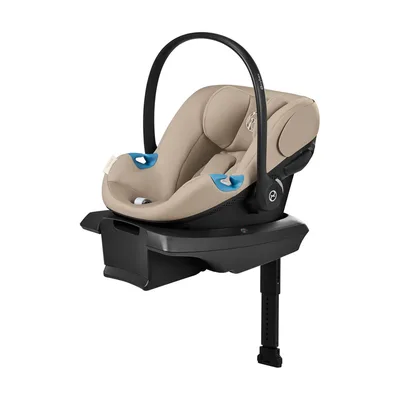 Cybex Aton G2 with Load Leg Base Cybex Aton G2 with Load Leg Base | Price tier 3 of 4 | Load-leg base, one tier below the Nuna | Not published | Check price |
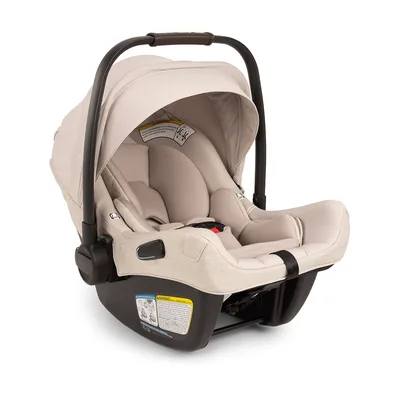 Nuna Pipa Aire RX + RELX Base Nuna Pipa Aire RX + RELX Base | Price tier 4 of 4 | Load-leg design built to protect front-passenger legroom | 17.5 in | Check price |
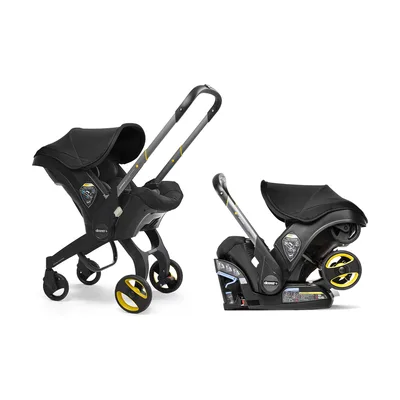 Doona+ Car Seat & Stroller Doona+ Car Seat & Stroller | Price tier 4 of 4 | Car seat and stroller in one shell | 17.4 in | Check price |
The picks, reviewed
01Clek Fllo
Best for consistent width
The Fllo is a convertible seat, not an infant carrier, so it's not the seat you bring home from the hospital, but it's the seat we'd point to first if the actual problem is squeezing multiple seats onto one bench. Clek's own spec sheet lists a 13-inch base width and a 16.9-inch seating width at its widest point, which is a small gap compared with infant carriers that can flare several inches wider at the top than at the base. It rear-faces to 50 pounds and forward-faces to 65, so it's built to stay in the same car for years rather than getting swapped out at 22 pounds like most infant seats. It ships with a steel anti-rebound bar built in rather than sold as an add-on.
- Width stays close to the same from base to shoulder height, making 3-across math more predictable; anti-rebound bar included standard; long usable lifespan in one car
- It's a genuinely heavy, bulky seat to move between cars or on travel days, and more than one owner has flagged the harness straps as stiff and annoying to adjust
- Real-world reviewers also note that with the anti-rebound bar extended rear-facing, front-seat legroom can feel snug rather than roomy, narrow doesn't mean it disappears entirely
02Chicco KeyFit 35
Best budget newborn pick
The KeyFit 35 is one of the most widely fitted infant seats in the country, which matters in a small-car context because it means more installers, more fire station car-seat check techs, and more online install videos have dealt with exactly this seat in exactly your situation. Chicco lists it at 16.5 inches wide by 24 inches tall, rated for infants from 4 to 35 pounds rear-facing. The base includes an integrated anti-rebound bar that, per independent CPST measurement, adds roughly an inch and a half of usable front-seat legroom over installing without it.
- Compact, well-documented base width; anti-rebound bar built into the base rather than a separate purchase; huge stroller-compatibility ecosystem if you're buying a travel system
- It does not have a load leg, stability rear-facing relies on the anti-rebound bar and a level indicator rather than a floor-braced leg, so in a car with an unusually reclined rear bench, dialing in a level, tight install can take more fiddling than seats built around a load leg
03Cybex Aton G2 with Load Leg Base
A load leg, one price tier below the Nuna
Replaces the Aton 2, which Cybex no longer sells in the US (checked 27 September 2026).
The Aton G2 is Cybex's current US infant seat in this line, and it ships with a load-leg base: a rigid leg that braces against the vehicle floor, plus a SafeLock belt tensioner for seatbelt installs. Cybex states the load leg can reduce crash forces on the child by up to 30 percent. It carries babies from 4 to 30 pounds and up to 32 inches, rear-facing only, which Cybex puts at roughly 18 months. Cybex does not publish a shell or base width on the page we checked, so measure your back seat at handle height before you buy.
- Load-leg base included, the same feature that protects front-passenger legroom on the Nuna
- One price tier below the Nuna
- GREENGUARD Gold certified, and meets FMVSS 213 side- and frontal-impact standards, per Cybex
- Cybex publishes no width we could compare, so the table shows none
- This seat family has had two harness recalls in three years: a 2023 webbing recall on older Aton models and a 2025 anchor-pin recall on the prior-generation Aton G. Neither names the G2 on NHTSA's record (checked 27 September 2026), but check Cybex's recall page before you buy
- Rear-facing only, so it gives way to a convertible seat at around 18 months
04Nuna Pipa Aire RX + RELX Base
Best for protecting front-passenger legroom
Replaces the Pipa RX, whose Amazon listing is gone. Nuna's own site showed this model out of stock when we checked, so confirm availability before you buy (27 September 2026).
The Pipa Aire RX is Nuna's current version of the same load-leg platform, sold with the RELX base: rigid lower anchors plus a stability leg that braces against the vehicle floor. A load leg is designed to reduce how much recline the seat needs to stay stable rear-facing, which is the depth factor that pushes into front-passenger space. Nuna lists it at 17.5 inches wide, 27.25 inches long and 23 inches high, for babies 4 to 30 pounds and 16 to 30 inches. The shell weighs 6.2 pounds before the canopy and inserts, which add about 2.2 pounds, and it is FAA-certified for aircraft with or without the base.
- Load leg plus rigid LATCH on the RELX base
- A light shell to carry, 6.2 pounds before the canopy and inserts
- FAA-certified for aircraft use with or without the base
- Premium price tier, the most expensive seat here alongside the Fllo
- The load leg needs solid, level flooring; a footwell with a hump, an angled floor or an under-seat storage bin can make the first install fiddly
- Stock was unsettled at every seller we checked
05Doona+ Car Seat & Stroller
A car seat that becomes a stroller
Evidence level for this pick: Handled. Bobby and Nikki used a Doona with one of their kids.
The Doona+ is a different kind of seat from the four above: a rear-facing infant car seat with a stroller frame built into the same shell, so the seat you lift out of its LATCH base folds out its own wheels. That changes the width question. Doona lists it at 17.4 inches wide in both car-seat and stroller mode, so there is no narrow base under a wider handle. That is wider than the Clek Fllo (16.9 inches) and the Chicco KeyFit 35 (16.5 inches) and about level with the Nuna Pipa Aire RX (17.5 inches), so it does not solve a tight middle-seat install any better than the seats above. It is rated for babies 4 to 30 pounds and up to 32 inches, installs with its LATCH base or without it on the vehicle belt, and Doona states it is FAA approved for aircraft. What it solves instead is not needing a separate stroller in the early months.
- Car seat and stroller in one shell: no separate frame taking up the trunk
- Installs with its LATCH base or on the vehicle belt alone, per Doona
- FAA approved for aircraft, per Doona
- At 17.4 inches it is no narrower than the seats above
- Heavy to lift as a seat: 17.2 pounds for the Doona+ alone
- No load leg; the handlebar doubles as an anti-rebound bar, the same kind of design as the Chicco KeyFit 35's, not a floor-braced leg like the Nuna's
- Top price tier, and no storage basket
- Reviewers report most children outgrow it around a year in, well before its 30-pound limit
We searched recall lists for Doona and its maker, Simple Parenting, on 27 September 2026 and found no NHTSA or CPSC recall. The independent lists at carseat.org and seatfitfinder.com show none either. That was a search of recall lists, not a live pull from NHTSA's own database, so check nhtsa.gov/recalls before you buy.
Check price on AmazonBuyer FAQ
Does a seat's base width tell you if it'll actually fit three-across?
Not on its own. Several infant seats have a narrow base but flare noticeably wider at shoulder or handle height, so the number that matters for a middle-seat passenger is the widest point of the shell, not the base. Check both measurements before assuming a "narrow base" seat will leave room for someone next to it.
Will a narrow car seat also protect front-passenger legroom, or is that a different measurement?
Different measurement. Side-to-side width affects the passengers next to the seat; front-to-back depth and recline angle affect the person sitting in front of it. A seat can be narrow and still push a front seat forward if it has a deep rear-facing recline or no anti-rebound bar or load leg to shorten that footprint.
Is it safe to buy a car seat online without test-fitting it in my own car first?
Generally yes, since every seat sold in the U.S. has to meet the same federal crash standards regardless of price. But small-car fit varies by seat cushion firmness, buckle location, and floor shape, which differ by vehicle model year, so buy from a retailer with an easy return window and test the install in your actual car before the return window closes.
Evidence level: ResearchedWe did not install any of these four seats or measure clearance ourselves.
One pick in this guide, the Doona+, is Handled: Bobby and Nikki used a Doona with one of their kids. Every other pick is Researched.
What we did, and did not do
- What we did
- Pulled each seat's official width and depth measurements from the manufacturer's own spec sheet.
- Last verified
- 5 September 2026
This is desk research, not a physical install test. We did not install any of these four seats or measure clearance ourselves. What we did do: pull each seat's official width and depth measurements from the manufacturer's own spec sheet, then cross-check those numbers against independent measurements published by certified child passenger safety technicians (CPSTs) who do install and measure seats by hand, to catch any gap between marketing copy and the number a tape measure actually gives. We only kept products confirmed as currently sold as of this writing, and we prioritized seats with a documented track record in small-car and three-across discussions over ones that are simply marketed as "slim" without published numbers to back it up.
Who wrote this
Bobby and Nikki Wiltgen. Married ten years, together sixteen. We run weddings, events, restaurants and short-stay rentals, and we are raising three kids. We label how we know on every post. Read our evidence standard, or more about us.