04Baby guide, 5 picks compared
Lightweight vs. All-Terrain Stroller: Which One You Actually Need
Editor's pick UPPAbaby Minu V3

Most families with a sidewalk-and-car life should buy the UPPAbaby Minu V3 and stop there. A $600 all-terrain stroller is overkill if you're never off pavement. If gravel trails, dirt paths, or grass are in your week every week, and not only in the plan, the BOB Gear Revolution Flex 3.0 earns its price. The Baby Jogger City Mini GT2 sits in between for people who want one stroller to do both jobs reasonably well.
Our picks at a glance
- Pick 01Editor's pickUPPAbaby Minu V3The current model
Best for parents whose week is sidewalks, stores, and car trips, or who travel often enough that fold size matters more than trail capability.
- Pick 02Also goodBaby Jogger City Mini GT2
Best for families who want one stroller to cover both pavement and occasional light trail use, and are willing to trade some portability for that range.
- Pick 03For a specific needBOB Gear Revolution Flex 3.0Thin on Amazon
Best for parents whose regular routine includes gravel trails, dirt paths, or grass, not an occasional weekend hike, an every-week habit.
- Pick 04For a specific needThule Glide 3Current running model
Best for parents who run regularly and need a stroller built around that specific use, not a general all-terrain stroller pressed into service as a jogger.
- Pick 05For a specific needDoona+ Car Seat & Stroller
Best for rideshares, flights and the hospital-to-home stretch, where one piece beats two.
Which life do you actually have?
This is the question to answer before you look at a single product. Stroller category follows lifestyle, not the other way around.
If your week is sidewalks, store aisles, restaurant hostess stands, and getting a folded stroller into a trunk. You have a sidewalk-and-car life. Buy lightweight. You will never miss the suspension you didn't buy.
If your week regularly includes a gravel trail, a dirt path, a grass field for soccer practice, or an unpaved driveway. You have a trail-and-gravel life. Buy all-terrain, and if you're actually running with it, buy a jogging stroller specifically, not just anything labeled "all-terrain."
If your stroller's main job is fitting in an overhead bin, a rideshare trunk, or a rental-car back seat more often than it's pushed over rough ground. You have a travel-heavy life. Buy lightweight and prioritize fold size and one-handed operation over anything else on the spec sheet.
If you genuinely don't know yet because your baby is newborn and your routine hasn't settled. Buy lightweight first. It's the cheaper mistake to make, and you can add a second stroller later if your life turns out to be trail-heavy. Almost nobody regrets not buying the $600 all-terrain stroller in month two.
The picks, compared
| Stroller | Price Tier | Best For | Buy |
|---|---|---|---|
 UPPAbaby Minu V3 UPPAbaby Minu V3 | Price tier 4 of 4 | Sidewalk-and-car life, travel-heavy families | Check price |
 Baby Jogger City Mini GT2 Baby Jogger City Mini GT2 | Price tier 3 of 4 | One stroller for pavement and light trail use | Check price |
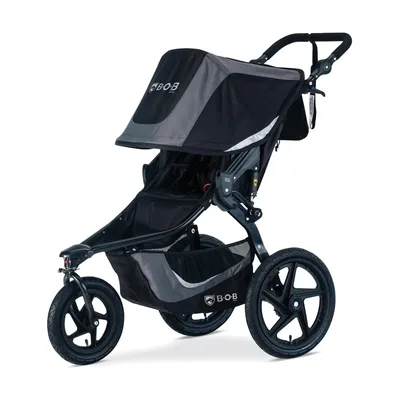 BOB Gear Revolution Flex 3.0 BOB Gear Revolution Flex 3.0 | Price tier 4 of 4 | Trail-and-gravel life, everyday off-road use | Check price |
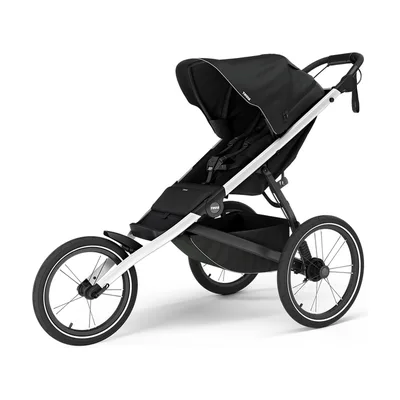 Thule Glide 3 Thule Glide 3 | Price tier 4 of 4 | Runners who actually jog with the stroller | Check price |
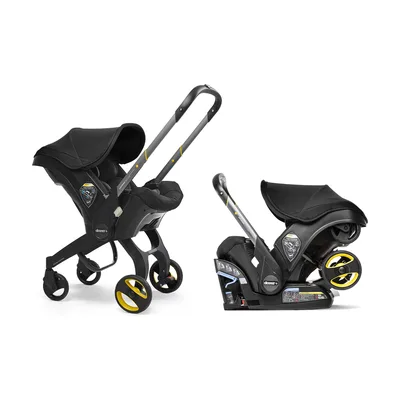 Doona+ Car Seat & Stroller Doona+ Car Seat & Stroller | Price tier 4 of 4 | Rideshares, flights and the first months, not trails | Check price |
The picks, reviewed
01UPPAbaby Minu V3
Lightweight
Replaces the Minu V2, which UPPAbaby no longer sells new (checked 27 September 2026).
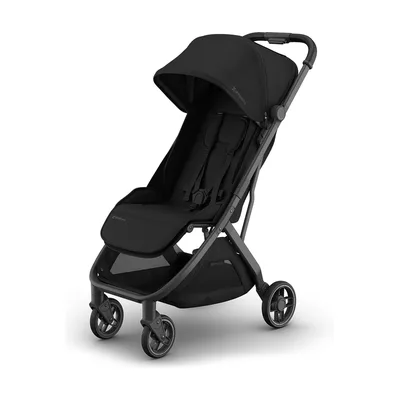
The Minu V3 is UPPAbaby's current lightweight stroller and its answer to "one stroller for everything except off-road." It weighs about 16 pounds, folds with one hand in about a second, stands on its own when folded, and folds to 10 by 18 by 21.5 inches, which UPPAbaby says meets IATA carry-on standards for overhead bins. It is rated from birth to 50 pounds and a 40-inch child, with a 20-pound basket. It's the pick for a sidewalk-and-car life, and the strongest option here if travel, not trail use, is the deciding factor.
- One-hand fold, and it stands on its own when folded
- Folded size meets IATA carry-on standards, per UPPAbaby
- Rated from birth to 50 pounds
- It's a premium price for the lightweight category: you're paying UPPAbaby pricing, not budget-lightweight pricing, not built for trails or running; if your week includes gravel, look at picks 03 and 04
02Baby Jogger City Mini GT2
Best Middle Ground
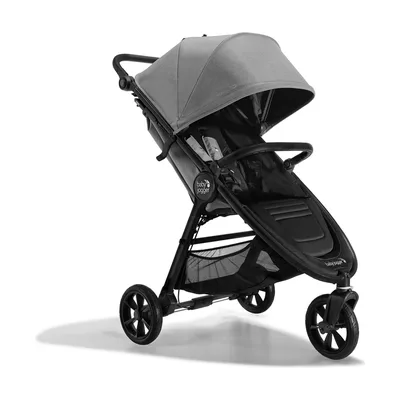
Baby Jogger markets the GT2 as "all-terrain," but it's really the hybrid option in this comparison. It has forecast-style tires and more suspension travel than a true lightweight stroller, while staying meaningfully easier to fold and lift than a dedicated jogging stroller like the BOB or Thule. It's the honest answer for someone who doesn't want to own two strollers but does hit the occasional dirt path, park lawn, or unpaved lot.
- One-hand fold despite the bigger tires, adjustable handlebar, noticeably better on cracked sidewalks and light gravel than a pure lightweight stroller
- It's a real step up in bulk and weight from the Minu V3, folding it into a small trunk or carrying it up a walk-up apartment stairwell is a genuinely different experience
- It's also not built for actual running; the front wheel doesn't lock for jogging stability
03BOB Gear Revolution Flex 3.0
Best for Trail-and-Gravel Life
New stock was thin on Amazon when we checked; BOB's own site and other stores had it new (27 September 2026).
This is the stroller for people who actually leave pavement on a regular basis. Air-filled tires and mountain-bike-style suspension are built to absorb repeated impact from roots, ruts, and gravel, not just survive it once. The front wheel swivels for everyday maneuverability but locks straight when you need stability, which is the detail that separates a real all-terrain stroller from one that just has slightly bigger wheels.
- Genuinely absorbs rough ground instead of just tolerating it
- Adjustable handlebar and hand-operated parking brake
- Front wheel lock adds real stability on uneven trail
- It's heavy and has a large folded footprint
- This is not a stroller you're grabbing for a quick errand or squeezing into a small hatchback trunk without thinking about it
- The air-filled tires also mean occasional tire-pressure maintenance and a real (if infrequent) flat-tire risk that a foam-wheeled stroller doesn't have
04Thule Glide 3
Best for Actual Running
Replaces the Urban Glide 2. Thule's Urban Glide 3 has a swivel front wheel, so the running pick is now the Glide 3 (checked 27 September 2026).
The Thule Glide 3 is built around running: a 16-inch front wheel that stays locked straight for stability at speed, 18-inch rear wheels, air-filled tires and a twist hand brake. That locked front wheel is the real dividing line between "all-terrain for walking" and "jogging stroller for running." It weighs 24.9 pounds and takes a child up to 49 pounds. If the honest answer to "why do you want an off-road stroller" is "I run," this is the more specialized tool.
- Front wheel fixed for stability at running speed
- Twist hand brake
- Large air-filled wheels, 16 inches at the front and 18 at the rear
- The fixed front wheel makes tight turns in stores and on crowded sidewalks harder than on the BOB or the City Mini GT2
- Priced at the top of this comparison for a stroller you'd get less everyday-errand use out of than the other three
05Doona+ Car Seat & Stroller
A car seat that becomes a stroller
Evidence level for this pick: Handled. Bobby and Nikki used a Doona with one of their kids.
The Doona+ solves a different problem from everything else in this guide. It is an infant car seat whose own shell folds out stroller wheels, so for the first months it can stand in for a separate stroller: lift it out of its base, wheels down, and you are walking. It does not match the UPPAbaby Minu V3 on fold size or the BOB Gear Revolution Flex 3.0 on trail comfort. Buy it for rideshares, flights and the hospital-to-home stretch. For a daily walk, the lightweight versus all-terrain choice above still decides it. The seat itself, with its width and recall check, is covered in our small-car seat guide.
- No separate stroller needed in the early months
- Goes from car to wheels without a second piece to carry
- No storage basket
- Small, hard wheels made for sidewalks and airport floors, not gravel or grass
- Heavier to carry than a dedicated infant seat: 17.2 pounds
- Top price tier, above every stroller here
- Reviewers report most children outgrow it around a year in
Buyer FAQ
Do I actually need an all-terrain stroller if I'm not a runner?
Probably not. All-terrain and jogging strollers earn their weight and price on gravel, dirt trails, or grass, surfaces where small wheels bog down. If your week is sidewalks, store aisles, and the trunk of a car, a lightweight stroller does that job better: it's easier to fold one-handed, lighter to lift in and out of a car, and cheaper.
Can a lightweight stroller handle a gravel trail or a cracked city sidewalk once in a while?
Occasionally, yes, a lightweight stroller with air- or foam-filled front wheels can survive a rough sidewalk or a short unpaved path without drama. What it won't do well is a regular gravel trail, a grassy park loop, or actual jogging; the small hard wheels catch on uneven ground and the frame isn't built to absorb that impact repeatedly.
What's the real difference between an "all-terrain" stroller and a "jogging" stroller?
All-terrain strollers are built for rough ground at walking pace and usually keep a swivel front wheel for maneuverability in stores and on sidewalks. True jogging strollers are built around a wheel setup meant for running, often with a front wheel that locks straight for stability at speed, and trade away tight-turn maneuverability to get it. If you run with the stroller, get a jogging stroller specifically, not just anything labeled all-terrain.
Evidence level: ResearchedNobody on our team has pushed any of these four strollers.
One pick in this guide, the Doona+, is Handled: Bobby and Nikki used a Doona with one of their kids. Every other pick is Researched.
What we did, and did not do
- What we did
- Confirmed each stroller is a real, currently sold model (not a discontinued or renamed one), checked its actual category positioning against the manufacturer's own product page.
- Last verified
- 5 September 2026
This is desk research, not a hands-on test, nobody on the Aisle & Cradle team has pushed any of these four strollers, and we're not going to pretend otherwise. What we did do: confirmed each stroller is a real, currently sold model (not a discontinued or renamed one), checked its actual category positioning against the manufacturer's own product page, and cross-referenced independent stroller-review sites for consistent, repeated feedback patterns rather than one-off complaints. We did not accept sponsored placements for this comparison. Where a spec, exact weight, exact folded dimensions, wheel-lock mechanism on the current model year, wasn't consistently confirmable across sources, we left it out rather than guess.
Who wrote this
Bobby and Nikki Wiltgen. Married ten years, together sixteen. We run weddings, events, restaurants and short-stay rentals, and we are raising three kids. We label how we know on every post. Read our evidence standard, or more about us.