03Baby guide, 3 picks compared
Diaper Genie vs. Ubbi vs. Munchkin Step: The Real Cost-Per-Diaper Comparison
Editor's pick Ubbi Stainless Steel Diaper Pail


If you're optimizing for the lowest cost over the two-plus years you'll actually own a diaper pail, the Ubbi Stainless Steel Diaper Pail wins. It's the only one of the three that accepts any standard 13-gallon kitchen trash bag instead of a brand-specific refill, so your ongoing cost is whatever plain trash bags cost, not a proprietary markup. It costs more upfront than the other two. If you'd rather pay less at checkout and don't mind restocking brand-specific refills, the Diaper Genie is the safer, most widely-stocked pick. If hands-free operation matters more to you than either cost factor, you're regularly changing diapers with your hands full, the Munchkin Step is the right call for its step-open lid, even though it runs two separate consumables instead of one.
Our picks at a glance
- Pick 01Also goodDiaper Genie (Signature / Platinum)
Best for parents who want a pail with refills they can grab at almost any store without planning ahead, and don't mind paying the ongoing proprietary-refill cost for that convenience.
- Pick 02Editor's pickUbbi Stainless Steel Diaper Pail
Best for cost-conscious parents who are fine paying more for the pail itself in exchange for never buying a proprietary refill again.
- Pick 03Also goodMunchkin Step Diaper Pail (Powered by Arm & Hammer)
Best for parents who prioritize hands-free operation and don't mind managing two separate refill items instead of one.
The picks, compared
| Pail | Price Tier | Best For | Buy |
|---|---|---|---|
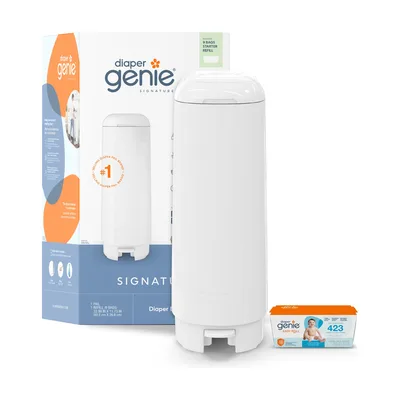 Diaper Genie (Signature/Platinum) Diaper Genie (Signature/Platinum) | Price tier 2 of 4 | Widest refill availability, twist-seal disposal | Check price |
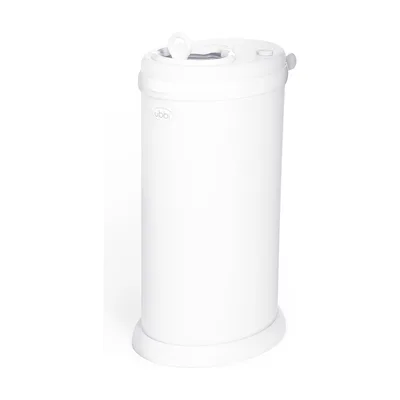 Ubbi Stainless Steel Diaper Pail Ubbi Stainless Steel Diaper Pail | Price tier 3 of 4 | Lowest lifetime cost, no proprietary bags | Check price |
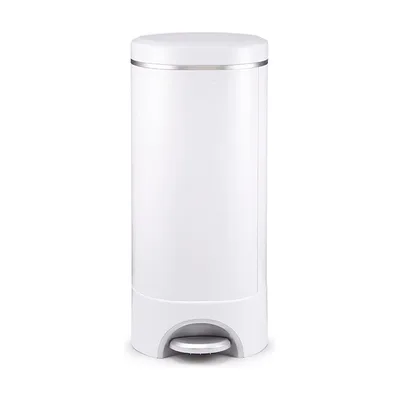 Munchkin Step (Powered by Arm & Hammer) Munchkin Step (Powered by Arm & Hammer) | Price tier 2 of 4 | Hands-free step-open lid, baking-soda odor control | Check price |
The picks, reviewed
01Diaper Genie (Signature / Platinum)
The pail most parents already know, and the one with the most refill options sitting on the shelf at Target, Walmart, and Amazon on any given week. That availability alone is worth something at 11pm during a blowout diaper. It uses a pull-and-twist mechanism that seals each diaper individually as it drops, rather than requiring you to knot a bag yourself. Refill cartridges are sold in multiple sizes, with packaging that advertises capacity in the thousands of "newborn diapers" per refill.
- Refills are the easiest of the three to find in a pinch at any big-box store or pharmacy; the twist-seal mechanism needs no bag-tying; lower upfront pail price than Ubbi
- Refills are pail-generation-specific
- A Signature refill doesn't fit a Platinum pail and vice versa, which is a genuinely common source of returns and mismatched purchases
- Because refill capacity is rated in newborn-sized diapers, real-world bag life drops noticeably once your baby is in size 3 or larger, meaning you'll restock more often than the printed number suggests
02Ubbi Stainless Steel Diaper Pail
The steel construction is a real functional choice, not just a design flex, steel doesn't absorb odor the way plastic pails can over a couple years of daily use. But the number that actually matters for this comparison is the bag system: Ubbi is built and marketed as needing "no special bags," meaning it's designed around any standard 13-gallon kitchen trash bag you'd buy in bulk at a warehouse club or grocery store. Ubbi does sell its own branded bags as an option, but you're not locked into them the way you are with the other two pails.
- No proprietary refill required, any generic 13-gallon trash bag works, which is what actually keeps the per-diaper cost down over the life of the pail
- Steel body resists retaining odor better than plastic over long-term use
- Highest upfront price tier of the three pails in this comparison
- Because it uses a full-size 13-gallon bag rather than a slim continuous cartridge, a bag that's only partially full doesn't seal as air-tight between changes as the twist mechanisms on the other two pails, so some parents find they're swapping bags before they're technically full just to manage odor
03Munchkin Step Diaper Pail (Powered by Arm & Hammer)
The step pedal is the headline feature here, genuinely useful when your hands are full with a squirming baby and you need the lid open without setting anything down. It uses Munchkin's "Snap, Seal & Toss" bag and refill-ring system for odor sealing, and layers in Arm & Hammer baking soda for extra odor control via a separate cartridge. That second part is the catch for this comparison: the starter kit ships with one refill ring and one baking-soda PUCK cartridge as two distinct consumables, not one.
- Hands-free step-open lid is a real convenience during diaper changes; the Arm & Hammer baking-soda odor system is a genuine point of differentiation from the other two pails; one-handed bag-seal mechanism is simple to use
- This is the only pail of the three with two separate recurring consumables to track and restock
- The refill ring/bag system and the baking-soda PUCK cartridge are sold and run out separately, which adds both complexity and cost compared to a single-consumable system
Buyer FAQ
Do diaper pail refill bags really need to match the brand of pail?
For Diaper Genie and Munchkin Step, yes. Both use proprietary bag or cartridge systems sized for their specific pail mechanism, and buying the wrong generation of refill (like a Signature refill for a Platinum pail) is a common mix-up. Ubbi is the exception: it's built to accept any standard 13-gallon kitchen trash bag, which is the main reason its long-term cost runs lower.
Why do diaper pail refill packages list such a high diaper count?
Capacity claims like "holds up to 2,160 diapers" are calculated using newborn-sized diapers, which are far smaller than the size 3 to 6 diapers your baby will wear for most of the first two years. Actual bag life shortens a lot as diaper size goes up, so budget for more frequent refill purchases than the box number implies.
Does a cheaper pail mean a cheaper diaper pail overall?
Not necessarily. The sticker price on the pail is a small fraction of what you'll spend on refills over two-plus years of daily use. Compare the ongoing refill cost and bag system, not just the upfront price tier, before deciding which pail is actually cheaper.
Evidence level: ResearchedWe did not use any of the three pails ourselves.
What we did, and did not do
- What we did
- Verified that all three products are real, currently sold on Amazon (not discontinued or renamed).
- Last verified
- 5 September 2026
This is desk research, not a hands-on physical test. We did not use any of the three pails ourselves. What we did do: verify that all three products are real, currently sold on Amazon (not discontinued or renamed), confirm how each one's refill or bag system actually works from the manufacturer's own product listings, and price each pail by relative tier rather than a specific dollar figure that goes stale. The angle most existing diaper pail roundups skip: the "holds up to X diapers" number printed on every refill package is calculated using newborn-sized diapers. Newborn diapers are the smallest, most compact size a baby wears, so that number is close to the best case, not the average case. As your baby moves through sizes 1 through 4 (and the diapers themselves get bulkier), the same refill bag holds fewer of them, and you buy refills more often than the box math suggests. Because none of these pails publish an exact per-bag or per-refill price that stays accurate for more than a season, this guide compares the system each pail uses (proprietary bag, proprietary cartridge, or generic trash bag), since that system, not the sticker price, is what actually determines your cost per diaper over time.
Who wrote this
Bobby and Nikki Wiltgen. Married ten years, together sixteen. We run weddings, events, restaurants and short-stay rentals, and we are raising three kids. We label how we know on every post. Read our evidence standard, or more about us.